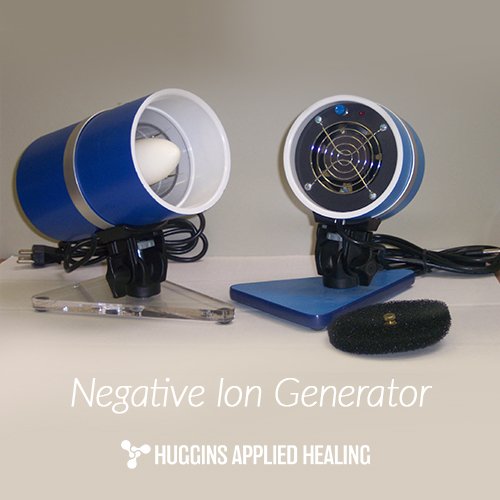
Your Guide to Cleaner Air: Choosing the Best Negative Ion Generator
Imagine stepping outside after a thunderstorm, taking a deep breath, and feeling that crisp, clean air invigorate you. That refreshing sensation? It's largely due to an abundance of negative ions. Now, what if you could bring that same revitalizing feeling indoors? That's the promise of a negative ion generator. If you're ready to upgrade your indoor air quality, this comprehensive Buyer's Guide: Choosing the Best Negative Ion Generator will cut through the noise, helping you find a unit that truly delivers.
At a Glance: Key Takeaways for Your Ionizer Search
- What they do: Negative ion generators release invisible, charged particles that latch onto airborne pollutants (dust, pollen, odors, etc.), making them too heavy to float, effectively clearing your air.
- Key benefits: Reduced allergens, dust, and unpleasant odors, leading to cleaner air and potential relief for allergy/asthma sufferers.
- Ozone is crucial: Some ionizers can produce ozone, which is harmful. ALWAYS prioritize CARB-certified or "ozone-free" models for continuous, safe use.
- Match to your space: Consider the square footage of the room where you'll use it.
- More ions, better performance: Higher ion output generally means faster, more effective purification.
- Maintenance matters: Decide between filterless (less hassle, potential "black wall" effect) and filtered (better comprehensive purification, ongoing filter costs).
The Breath of Fresh Air You Deserve: Understanding Negative Ion Generators
Negative ion generators aren't magic, but they harness a natural phenomenon to clean your air. They work by releasing negatively charged ions into your living space. These invisible ions act like tiny magnets, attracting and attaching themselves to airborne particles such as dust, pollen, pet dander, mold spores, and even smoke and other odor-causing pollutants.
Once these negatively charged ions bond with the positively charged pollutants, the particles become heavier, causing them to fall out of the air you breathe or stick to surfaces, effectively removing them from circulation. It’s a subtle yet powerful process, much like how the air near waterfalls or in forests feels so incredibly fresh. Modern units can churn out millions of these beneficial ions every second, constantly working to refresh your indoor environment.
Why Bother? The Real Benefits of Cleaner Indoor Air
Investing in a negative ion generator isn't just about gadgetry; it's about investing in your well-being. Here's what you stand to gain:
- Cleaner Air, Healthier Lungs: These generators excel at tackling fine contaminants that often lead to or worsen respiratory issues like asthma and bronchitis. By removing these microscopic invaders, you're creating a healthier breathing environment.
- Allergy Relief: For allergy sufferers, the battle against pollen, dust mites, and pet dander is constant. Negative ionizers actively reduce these allergens in the air, potentially offering a significant reprieve from sneezes, sniffles, and itchy eyes.
- Odor Annihilation: Ever struggled with lingering cooking smells, pet odors, stale smoke, or that persistent musty scent? Negative ion generators are surprisingly effective at minimizing a wide array of unpleasant odors, leaving your home smelling fresher and cleaner.
Critical Safety First: Navigating Ozone Production
This is arguably the most important section of any buyer's guide for negative ion generators. While the benefits are clear, it's crucial to understand a potential byproduct: ozone (O3).
Some negative ion generators can produce ozone as a byproduct. At high concentrations, ozone can be harmful to respiratory health, causing irritation and even damage to the lungs. This is why vigilance is key when making your selection.
Your non-negotiable safety checklist:
- Ozone-Free or Low Emission: Always seek out units explicitly certified as "ozone-free" or those that produce less than 0.05 parts per million (ppm) of ozone. Many reputable manufacturers will proudly state this on their packaging or product descriptions.
- CARB Certification: Look for models that are CARB-certified. This means they meet the stringent California Air Resources Board (CARB) ozone emission standards, which are among the toughest in the world. It's a reliable indicator of a safer product.
- Built-in Safeguards: Some advanced units include built-in ozone sensors that will automatically shut off the device if ozone levels exceed a safe threshold. Timers also help ensure the unit doesn't run for excessive periods.
A Crucial Distinction: Ozone Generators Are Different!
It's vital to differentiate between standard negative ion generators and dedicated ozone generators. Ozone generators are designed to produce significant amounts of ozone for powerful odor elimination in highly contaminated spaces (e.g., after a fire or severe mold). - Ozone generators must only be used in unoccupied spaces. Never, under any circumstances, operate an ozone generator when people or pets are present.
- Ventilation is key: After using an ozone generator, ventilate the treated area thoroughly for at least one hour (or longer) before re-entry. Always follow the manufacturer's specific safety guidelines to the letter. These devices are for extreme situations, not for daily use in occupied rooms.
How to Choose the Best Negative Ion Generator for Your Home
With safety covered, let's dive into the practical considerations that will guide you to the perfect unit. Thinking through these factors will help you make an informed decision that truly meets your needs. If you're curious about the science behind these devices, you can always learn more about negative ion generators and how they contribute to cleaner air.
1. Matching Coverage Area to Your Space
This is your starting point. A small, plug-in unit won't do much for an open-concept living room, just as an overpowered system is overkill for a tiny bathroom.
- Small Rooms (e.g., bathrooms, small offices, personal desks): Look for units covering less than 200 square feet. Many compact, plug-in models are ideal here.
- Medium Rooms (e.g., bedrooms, average kitchens): Aim for generators rated for 200-500 square feet.
- Large Rooms & Open-Plan Areas: You'll need units designed for 500+ square feet. For very large spaces or whole-house purification, consider multiple units strategically placed, or a multi-technology system that includes a powerful ionizer. Always check the manufacturer's specified room size and consider your ceiling height, as volume also plays a role.
2. Ion Output: The Power Behind the Purification
Think of ion output as the "muscle" of your generator. Measured in millions of ions per second, a higher output generally translates to better and faster cleaning performance.
- Entry-level units: Might produce a few million ions/second.
- High-performance units: Can reach 20 million ions/second or more.
While higher is often better, it's also about balancing this with energy efficiency (we'll get to that) and your specific needs. For general air purification in a medium-sized room, a unit producing 10-20 million ions/second is often a sweet spot.
3. Ozone Safety: Reiterate and Prioritize
We’ve covered this, but it bears repeating: Prioritize CARB-certified and ozone-free models for continuous, safe use in occupied spaces.
- Look for clear labeling.
- Consider units with built-in ozone sensors and automatic shut-off timers for an extra layer of protection, particularly if you're sensitive or unsure.
- If a product listing doesn't explicitly state its ozone emissions or CARB certification, proceed with caution and consider another option. Your health is not worth the risk.
4. Energy Efficiency: Keeping Your Bills Low
Most quality negative ion generators are remarkably energy-efficient, designed for 24/7 operation without breaking the bank.
- Many excellent units consume less than 5W of power.
- For context, running such a unit continuously for a month often costs less than $5 in electricity.
This means you can enjoy cleaner air around the clock without worrying about a significant spike in your utility bills. Check the wattage specification before buying.
5. Maintenance: Filters or Filterless?
This choice often boils down to personal preference and how much hands-on maintenance you're willing to do.
- Filterless Models: These units don't require filter replacements, which saves money and hassle. However, because the charged particles eventually settle out of the air, filterless ionizers can sometimes lead to a phenomenon known as "black wall residue" – a fine layer of dust and grime that settles on nearby surfaces (especially walls and furniture). This is harmless but requires periodic wiping down.
- Models with Filters (e.g., HEPA, activated carbon): While these incur ongoing filter replacement costs (typically every six months, depending on usage and air quality), they offer more comprehensive air purification. The ionizer often works in conjunction with the filter to capture smaller particles that might otherwise escape. If you're looking for broader air quality improvement beyond just ionization, a filtered model is a strong contender.
6. Noise Level: Peace and Quiet
For a device meant to run constantly in your home, noise level is a significant factor. The good news is that most negative ion generators are designed to be very quiet.
- Many boast "noiseless" operation or list decibel (dB) levels below 30dB, which is roughly equivalent to a whisper or the rustling of leaves.
- If you plan to use the unit in a bedroom or quiet office, always check the specifications for noise levels. Some units may have a fan, which can add a slight hum, so ensure it's acceptable for your environment.
7. Dimensions & Weight: Placement and Portability
Consider where you intend to place your generator and if you need to move it around.
- Compact & Portable: Some units are incredibly small (e.g., 4 x 0.7 x 1.8 inches, 2.4 ounces) with foldable plugs, perfect for travel, small bathrooms, or discreet placement.
- Larger Systems: More robust units, especially those with multiple purification stages or larger coverage, will naturally be bigger and heavier. Think about available surface space (table, countertop, desk, floor) and whether it needs to blend into your décor.
8. Modes & Settings: Customizing Your Clean Air
Advanced features can enhance usability and tailor the experience to your needs.
- Timer Functions: Handy for running the unit for specific durations (e.g., 2, 4, 8 hours) or for treating a room before you enter.
- Multiple Fan Speeds: Allows you to ramp up purification when needed (e.g., after cooking) or run it silently in "sleep mode."
- Operational Modes: Some units offer different modes for various scenarios, optimizing ion output or combining it with other features.
9. Extra Features: Beyond Basic Ionization
Some generators offer additional functionalities that might appeal to you:
- Motion Detection: Can save energy by activating only when someone is present.
- Light Therapy: Some units integrate ambient lighting or even specific light wavelengths for added benefits (though scientific evidence for air-purifier-integrated light therapy benefits can vary).
- Essential Oil Diffusers: A nice touch if you enjoy aromatherapy, allowing you to combine air purification with pleasant scents.
Top Picks: Recommended Negative Ion Generators
Based on extensive research and testing, these negative ion generators stand out for their performance, safety, and value. Remember to always double-check current pricing and availability.
Overall Best & Comprehensive Purification
For those seeking robust air purification that goes beyond just ionization, these units offer multi-stage cleaning.
- POMORON 4-in-1 Air Purifier
- Key Features: This powerhouse combines H13 True HEPA filtration (captures 99.97% of particles down to 0.3 microns), UV-C light sterilization, negative ion generation, and an essential oil diffuser.
- Performance Highlights: Operates ultra-quietly (as low as 25dB in sleep mode), making it perfect for bedrooms. Offers an 8/12/24-hour timer and 4 fan speeds for customized use.
- Coverage: Impressive 1250 sq ft, making it suitable for larger rooms or open living areas.
- Dimensions: 6.34″ x 6.34″ x 11.81″ – a compact tower design.
- Why it Stands Out: It's a complete air quality solution, tackling particles, germs, odors, and providing negative ions, all while being remarkably quiet.
- Clarifion - Negative Ion Generator
- Key Features: A straightforward, plug-and-play negative ion generator with one operational mode. Simplicity is its strength.
- Coverage: Designed for very small spaces, up to 5 square meters (approximately 53 sq ft). Ideal for personal spaces, small bathrooms, or closets.
- Price: Typically around $65, offering a basic entry into negative ionization.
- Why it Stands Out: Its incredible simplicity and compact design make it an Editor's Choice for basic, localized ion generation, though its coverage is quite limited compared to other options.
Budget-Friendly, Compact, & Portable Options
Perfect for travelers, small rooms, or those looking for an affordable way to introduce negative ions into multiple spaces.
- Evron Ultra-Thin
- Key Features: Exceptionally compact and lightweight with a foldable plug, making it incredibly portable. Filterless design.
- Performance Highlights: Effectively reduced cooking odors in a small kitchen within 30 minutes and noticeably reduced dust in a 300 sq ft bedroom over a week of continuous use.
- Ion Output: Impressive 20 million ions per second for its size.
- Power: Consumes just 0.5W, costing less than $0.50 per month to run 24/7.
- Dimensions: 4 x 0.7 x 1.8 inches, 2.4 ounces.
- Why it Stands Out: Its tiny footprint, high ion output, and ultra-low running cost make it an excellent personal air freshener and dust reducer.
- Holniva Portable
- Key Features: A true plug-and-play device, filterless, and includes an optional soft night light.
- Performance Highlights: Proven effective at eliminating musty odors in hotel rooms within an hour, making it a traveler's best friend.
- Coverage: Suitable for spaces up to 150 sq ft.
- Dimensions: 4.33 x 2.95 x 2.36 inches, 1.12 ounces.
- Why it Stands Out: Perfect for on-the-go freshness in hotel rooms, small offices, or guest bathrooms.
- AUKUU 4-Pack
- Key Features: A set of four filterless, plug-in negative ion generators designed for instant setup and low power consumption.
- Cost: At around $54.99 for four units (less than $14 each), this offers exceptional value.
- Why it Stands Out: An incredibly cost-effective solution for placing ionizers in multiple rooms throughout your home or office without breaking the bank.
- IonPacific ionbox
- Key Features: USB powered for versatile placement, ultra-low power consumption.
- Ion Output: Delivers a powerful 20 million ions per second without producing the "black wall residue" sometimes associated with high-output filterless units.
- Power: Ultra-low 1.5W consumption.
- Dimensions: 2.1″ x 4.4″ x 6.2″.
- Coverage: Effective for rooms up to 500 sq ft.
- Why it Stands Out: Combines high ion output with a clean operation, versatile USB power, and impressive coverage for a compact device.
Powerful Odor Elimination (Ozone Generators – USE WITH EXTREME CAUTION!)
These units are specifically designed for heavy-duty odor removal and must be used only in unoccupied spaces. They are not for continuous air purification in inhabited areas.
- Hadlook Ozone Generator
- Key Features: A robust ozone generator with simple timer controls.
- Ozone Output: Powerful 48,000mg/h ozone.
- Coverage: Capable of treating spaces up to 4000 sq ft.
- Performance Highlights: Excels at eliminating tough, entrenched odors like musty basements, smoke, pet smells, and mold in as little as 30-minute treatments.
- Operation: Relatively quiet at 30dB.
- Dimensions: 6.89″ x 5.31″ x 5.2″.
- Safety Critical: Strictly for use in unoccupied spaces only. Always ventilate for at least 1 hour after treatment before re-entry.
- Why it Stands Out: For severe odor challenges in large, vacant areas, this is one of the most powerful units available.
- VERDECORE Professional
- Key Features: All-metal construction for durability, timer up to 120 minutes with auto shut-off. Combines ozone generation with negative ion generation.
- Ozone Output: An astounding 120,000mg/h ozone.
- Coverage: Effective for spaces up to 2500 sq ft.
- Performance Highlights: Ideal for eliminating severe odors, such as those from smoke-damaged rooms, in treatments as short as 60 minutes.
- Operation: Runs at 30dB.
- Safety Critical: Produces a very high level of ozone; must ONLY be used in unoccupied spaces. Thorough ventilation is mandatory after treatment and before re-entry.
- Why it Stands Out: The pinnacle for tackling the most stubborn odors in large spaces, with the added benefit of post-ozone negative ion generation.
Ultimate Air Purification (Premium/Multi-Technology)
For those who want comprehensive air quality control and don't mind a higher investment.
- Ivation 5-in-1
- Key Features: This is a comprehensive air purification system combining HEPA filtration, activated carbon, photocatalytic oxidation (PCO), UV-C light, and ozone generation. Crucially, the ozone generation can be operated independently or combined with other functions.
- Performance Highlights: The HEPA filter captures 99.97% of 0.3-micron particles, activated carbon absorbs odors and VOCs, photocatalytic oxidation breaks down pollutants, and UV-C light provides sterilization.
- Coverage: Designed for substantial spaces up to 3700 sq ft, making it suitable for very large homes or even commercial environments.
- Design: Housed in an attractive cherry wood cabinet.
- Why it Stands Out: It's a complete indoor air quality ecosystem, offering a layered approach to purify, sterilize, and refresh the air, with the flexibility to use ozone only when the space is unoccupied.
Getting the Most from Your Negative Ion Generator: Usage and Maintenance
Once you've chosen your ideal negative ion generator, a few simple practices will ensure you maximize its effectiveness and lifespan.
Cleaning and Filter Care
- Filterless Units: These devices collect pollutants on internal plates or nearby surfaces. You'll need to periodically wipe down the ion emitter pins and surrounding areas to remove any accumulated dust or "black wall" residue. A slightly damp cloth is usually sufficient.
- Filtered Units: Follow the manufacturer's recommendations for filter replacement. Most disposable filters should be replaced every six months, or sooner if you notice a decline in air quality or reduced airflow. Regular checks can save you money by preventing unnecessary replacements while ensuring optimal performance.
Optimal Placement for Maximum Impact
Where you put your negative ion generator makes a difference.
- Spacious & Open: For the best circulation and reach, place your unit in a spacious, open area. This could be a table, countertop, desk, or floor, ensuring it's not tucked away in a corner or behind furniture.
- Avoid Confined Spaces: Placing it in a cupboard or a very tight nook will restrict airflow and reduce its effectiveness.
- Central Location: In a large room, a central location often allows for the widest dispersion of ions.
Running Your Generator: When and How Long?
Negative ion generators are designed for continuous use in occupied spaces (provided they are ozone-safe!).
- Run Time: For consistently clean air, run the generator as much as possible in frequently used rooms like living areas and bedrooms.
- Timer Modes: Utilize timer functions for less-used areas or for specific treatments (e.g., running it for a few hours in a guest room before visitors arrive). This can help save electricity and reduce wear on the unit, though modern units are very durable.
Breathe Easier: Your Next Steps
Choosing the best negative ion generator means balancing powerful purification with critical safety considerations and practical features. By understanding your space, prioritizing CARB-certified and ozone-free models, and considering your maintenance preferences, you're well on your way to enjoying a home filled with noticeably cleaner, fresher air.
Take a moment to re-evaluate your primary needs: Are you battling severe allergies, persistent odors, or simply seeking a general boost to your indoor air quality? Revisit the specific recommendations, cross-reference them with your must-have features, and confidently choose the generator that will help you breathe easier, every single day.